Introduction
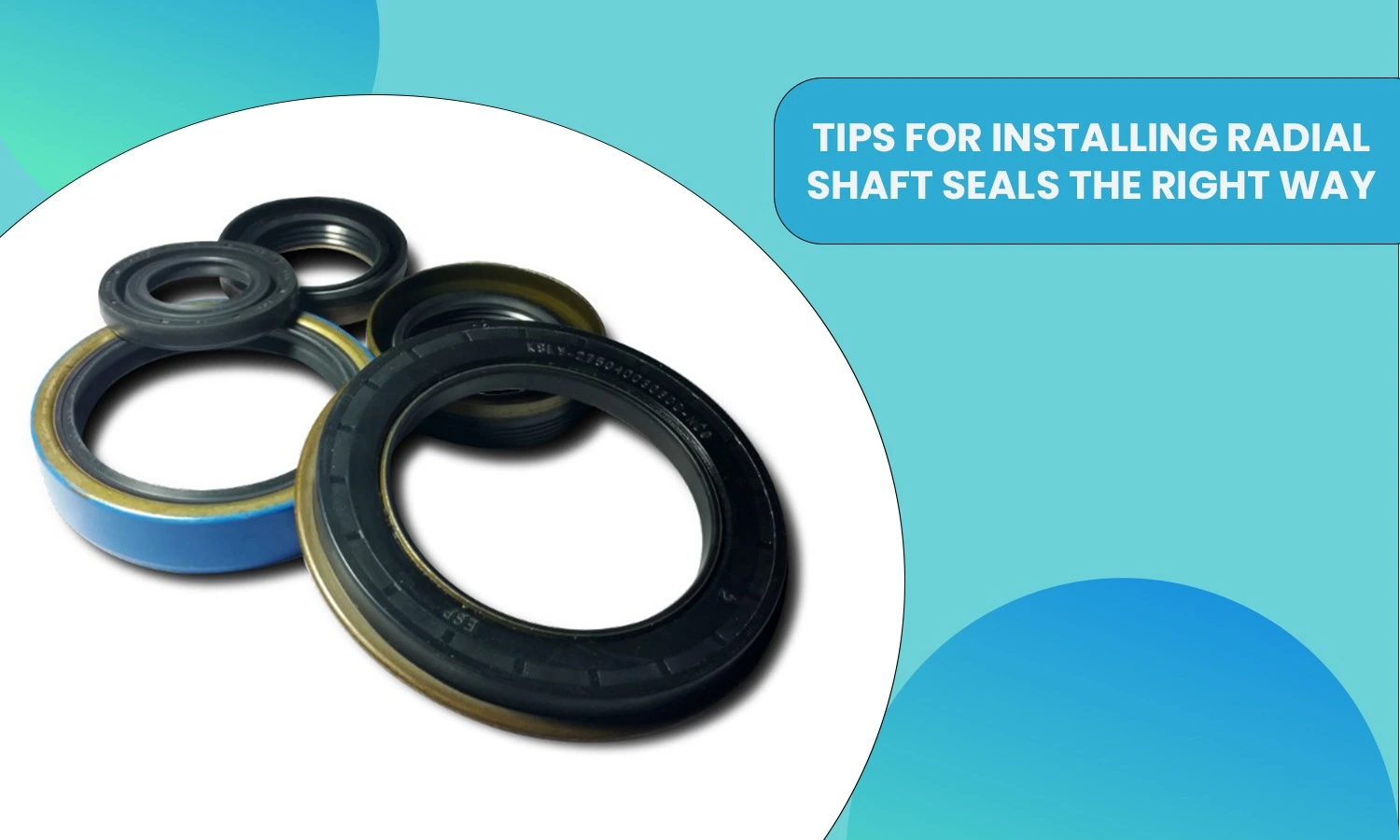
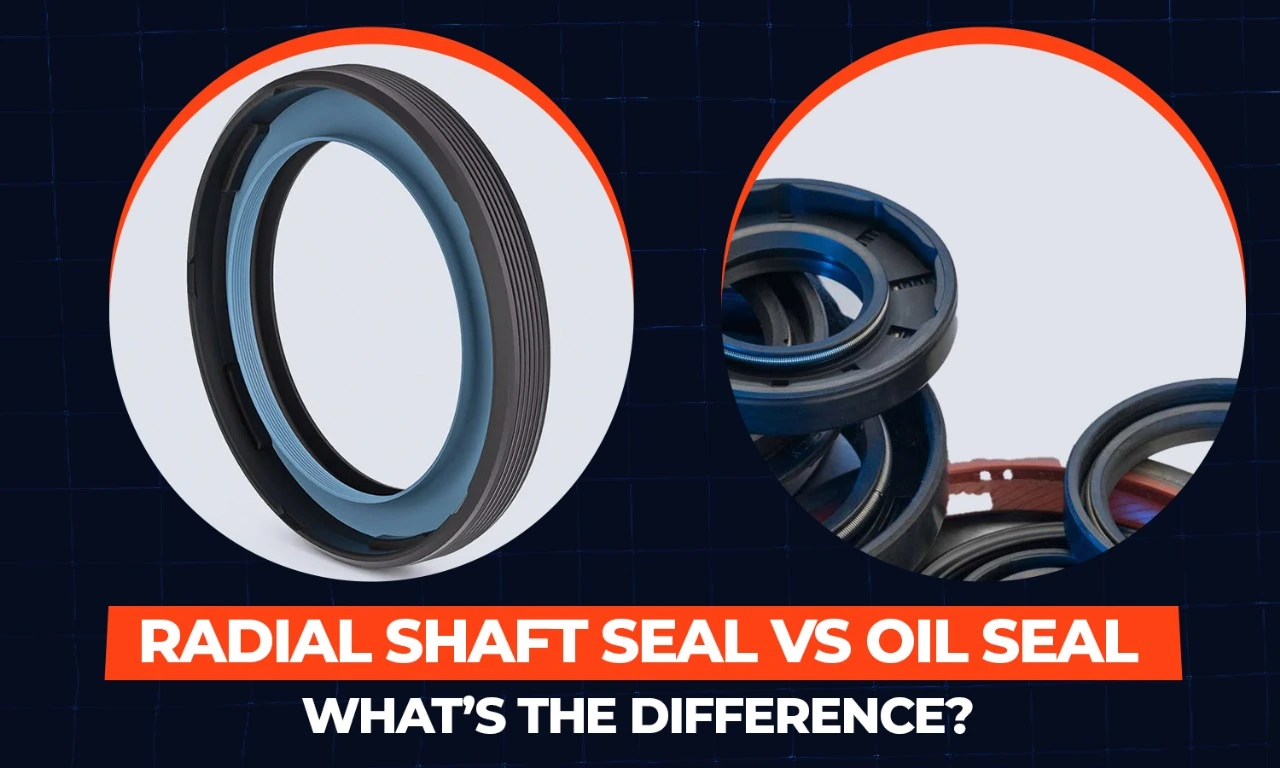
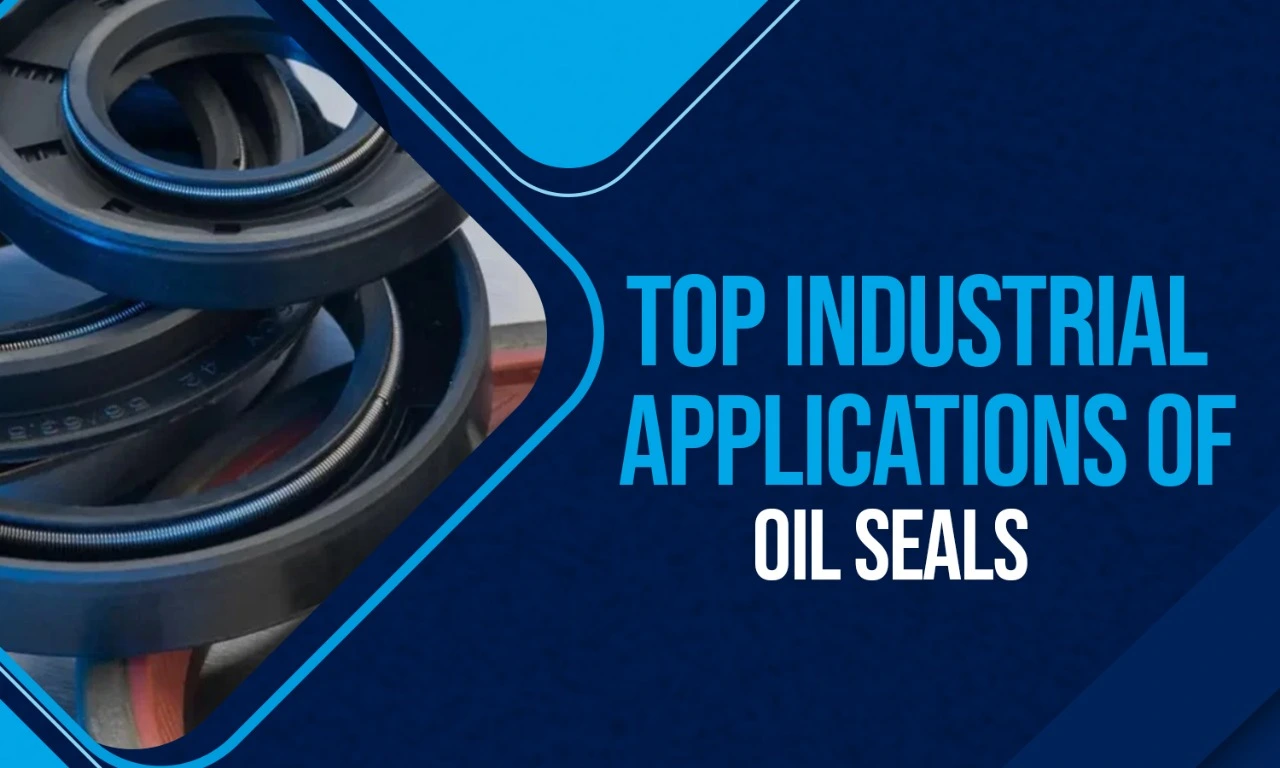
Oil seals are essential for preventing lubricant leakage and blocking contaminants in rotating machinery. Choosing the right seal begins with understanding the components of an oil seal each designed for durability, performance, and precision. The components of an oil seal are often overlooked, but they play a key role in the reliability and service life of industrial equipment.
What is an Oil Seal Made Of?
- Shell: Gives structural support
- Lip: Provides a flexible sealing barrier
- Spring: Maintains contact pressure for effective sealing
What Are the Main Components of an Oil Seal and Its Functions?
Understanding the purpose of each part is critical for selecting a seal that fits specific industrial needs. Below is a deeper look at each component based on standard oil seal construction. Whether for OEM systems or aftermarket replacements, selecting oil seals with the right design ensures long-term equipment reliability.
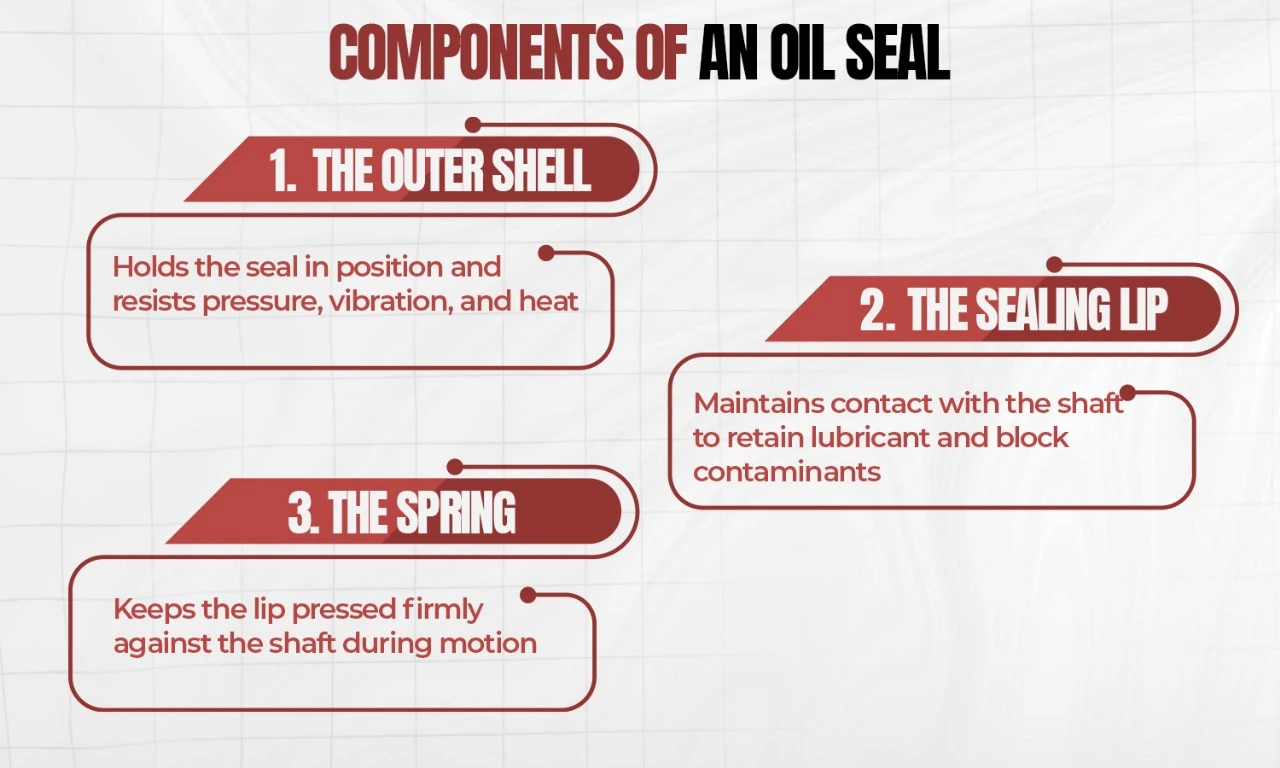
The Outer Shell: Structure and Material
- Material: Stainless steel or carbon steel
- Function: Holds the seal in position and resists pressure, vibration, and heat
- Relevance to Oil Seal Construction: Acts as the mechanical anchor inside the bore
The Sealing Lip: Ensuring Leak-Proof Functionality
- Material: Nitrile rubber (NBR), fluorocarbon (FKM), or silicone
- Function: Maintains contact with the shaft to retain lubricant and block contaminants
- Connection to Oil Seal Design: Lip angle and material determine sealing efficiency
The Spring: Maintaining Contact and Pressure
- Material: Corrosion-resistant stainless steel
- Function: Keeps the lip pressed firmly against the shaft during motion
- Impact on Oil Seal Dimensions: Adds dynamic adaptability to misalignments or wear
Summary Table: Parts of an Oil Seal
Conclusion
The components of an oil seal—outer shell, sealing lip, and spring—work in unison to protect critical machinery. Each part is engineered to endure high speeds, temperature variation, and abrasive environments. Whether it’s oil seal design for automotive systems or equipment in heavy industries, the right combination of materials and dimensions matters. Deepee Rubber’s oil seals are designed with industry-specific performance demands in mind, offering high-grade sealing solutions for manufacturing, heavy machinery, and automotive applications.
Key Takeaways
- Oil seals are made of a shell, sealing lip, and internal spring.
- Each component serves a distinct function to prevent leaks and resist wear.
- Oil seal design depends on application speed, pressure, and chemical resistance.
- Accurate oil seal dimensions ensure long-term equipment efficiency.
- Deepee Rubber delivers precision-engineered seals for industrial reliability.